In order to improve learning quality, augmented reality (AR)
technology is considered as a form of "next-generation" instructional
medium, particularly for outdoor exploratory activities. It has recently
expanded the possibilities for developing more engaging and instructive
learning environments. This work creates a new learning paradigm for outdoor
collaboration spaces and a mobile augmented reality system for a creative
design coursework. Gamers all over the world are playing augmented reality
games, which has drastically altered the gaming industry. Every gamer looks for
a VR immersive experience that gives them the fleeting impression that they are
a part of another reality. It enables one to become a character and produces
what is referred to as an intensified absorption experience, which leads to
strong emotions.
The application of augmented reality in engineering education can
significantly enhance student learning and provide richer experiences. With
augmented reality, we may view the environment right in front of us, like kids
playing soccer, dogs chasing balls, and swaying park trees, with a digital
augmentation projected over it. The learning process can be made more
interesting, amusing, and motivating for the student by fusing the real
environment with 3D virtual elements via AR technology.
The process of learning by doing is called experiential learning in augmented reality.
Students are better able to apply the theories and skills they have gained in
the classroom to real-world circumstances when working on practical projects
and reflecting. By projecting digital things onto a real-world surface, the educational
process can be improved with the aid of a cutting-edge technology known as
augmented reality. In addition to expanding beyond simply academic training,
real-world scenarios are produced in the classroom and creative solutions to
problems affecting contemporary society are offered. They develop knowledge of
how things function and appear. This is a great method for keeping kids'
interest during challenging lessons that call for some level of concentration.
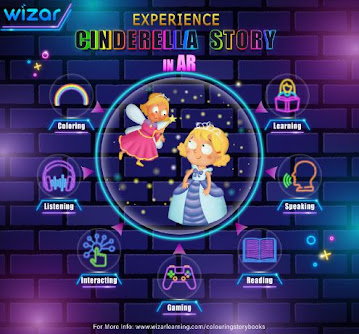
It is used to teach phonics as well as other subjects, including languages.
Technology like virtual reality (VR), augmented reality (AR), and
mixed reality (MR) are all used in immersive learning to support learning. It
mimics actual situations to encourage engagement and immersion in the learning
process. They offer a secure environment where learners are allowed to make
(and learn from) mistakes without compromising their safety in the real world
since interactions with virtual goods closely match those in the real world.
Since they are a novel learning platform, immersive learning environments based on games have the capacity
to address difficult teaching difficulties.
Learning happens by doing. When they are interested, they learn.
Both of these goals are accomplished via teaching in video games. When used
properly, game-based settings give users a lot of flexibility and limits that
can dramatically improve learning results and experience perceptions. Virtual
Reality (VR) environments and game-based learning techniques have great promise
to improve training and learning methods. As part of immersive learning,
students are submerged in a virtual debate, and this sense of presence is used
as proof that they are interested in the material being studied. IVideo games
that immerse users in an alternate reality utilize a range of strategies to
make the player feel more authentic to the character they are playing. Children
who play video games with cutting-edge graphics learn in an immersive environment
and are able to combine fluid gameplay, a fully realized story, and a high
level of realism.
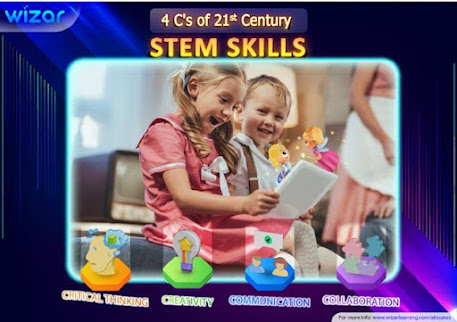
Youngsters can comprehend ideas and pick up new skills, and they
typically want to do so. Although a child's talents may be limited by
developmental issues, there is still a lot of space for improvement in terms of
development, skill acquisition, and knowledge. By offering a link to the
Metaverse of Learning, Wizar Learning
seeks to reinvent the future of education. Learning has become immersive and
gamified. They encourage children's intrinsic curiosity by teaching them about
the science underlying everyday objects, helping them comprehend how things
work, and introducing them to the delight and satisfaction of making new things.
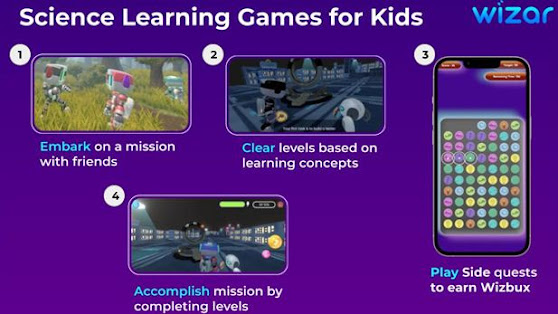
Wizar Learning has arrived to
provide engaging quizzes and activities that adhere to the gamification
principle in courses and follow curricula. In augmented reality games for
experiential learning, kids can play immersive games, connect with others,
invite friends, customize their Avatars, buy goods, and level up by earning
Wizbux.


Comments
Post a Comment