Educational Games for
kids
The internet has been a significant part of Generation
Z children's life since they were very young. They are the most technologically
adept generation to date, and technology plays a huge role in everything they
study. Many educators have learnt to embrace high-tech teaching strategies,
such as educational games, game-based learning, and "blended
learning," rather than trying to exclude children from the technology that
plays such a significant role in their lives.
Educational Games: Games that are educational are those that are made to
instruct players on a certain topic or ability. They can be utilized both
inside and outside of the classroom and are primarily designed for children and
students of all ages. Serious gaming includes educational games as a
subcategory.
Game-based learning: It is the practice of gaining knowledge or skills via
game. Any game, whether serious or not, can have it. Chess training in this
regard could serve as a strategy skill.
Specific learning objectives have been considered when
developing educational games for kids. Since
educational games incorporate game-based learning, the word "educational
games" can be used to refer to both the process of learning as well as the
delivery of education.
Here
are 6 important reasons for using Educational
games for kids:-
●
Teach
soft skills
●
Give
real-time feedback
●
Adaptive
learning
●
Increased
involvement of students
●
Better
retention
●
Make
complex topic simpler for kids
21st Century STEM skills
The Digital Age, characterized by previously unheard-of
technological advancement and the ensuing explosion of information, began as
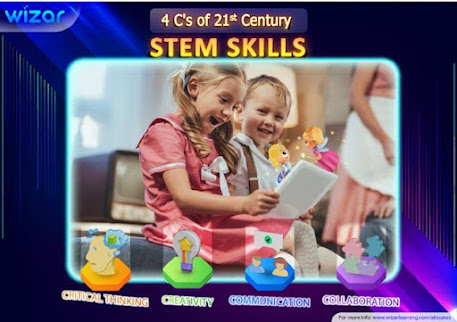
the 21st century came into being. The "four C's" of 21st century skills—creativity,
critical thinking, collaboration, and communication—are incorporated into the STEM curriculum. Students collaborate to
come up with original answers to contemporary issues and share those answers
with others..
➔
Creativity and Innovation - Both are the processes of developing new ways of
thinking to address challenges as they arise and to produce novel goods and
services.
➔
Critical Thinking and Problem Solving - Applying higher order thinking to novel challenges
and issues, employing proper reasoning as they thoroughly assess the issue and
choose the best course of action for solving it.
➔
Communication - Communicating is the art of effectively exchanging
information utilizing a variety of mediums and technology in a wide range of
situations and contexts.
➔
Collaboration - It is the process of creating, using, and sharing
knowledge, solutions, and innovations with others in a polite and productive
manner.
Wizar Learning
By offering a portal to the Metaverse of Learning, Wizar Learning seeks to reinvent the
future of education. It reimagines the type of education that will equip K–8
students with the knowledge that is necessary for the 21st century STEM skills. They have gamified
and made learning immersive. They encourage kids' inherent curiosity by
teaching them about the science of everyday things, assisting them in learning
how things work, and introducing them to the fun and satisfaction of creating
new things. Wizar Learning has arrived to
present thought-provoking games and quizzes that adhere to the idea of
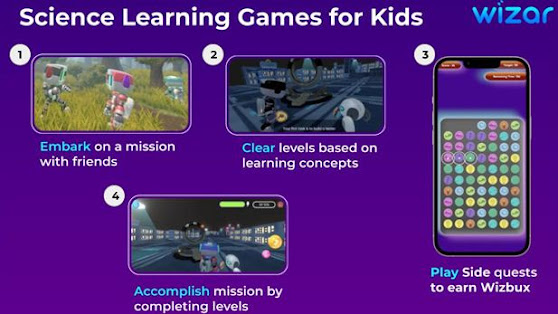
gamification in STEM fields and are curriculum-aligned. Games for experiential
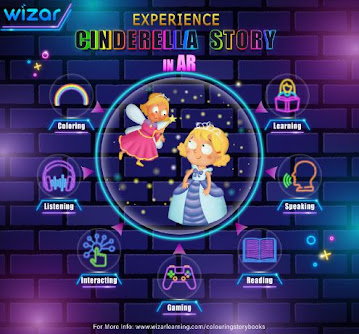
learning in augmented reality allow children to play immersive games,
communicate with others, invite friends, customize their Avatars, purchase
goods, and level up by earning Wizbux.
Students learn the most effective and efficient ways
to access and handle the universe of digital information that is available to
them by using the proper technology tools to achieve their work. A STEM
classroom appeals to "digital natives" as a friendly and stimulating
setting that takes into account their desire to participate actively in their
learning.


Comments
Post a Comment